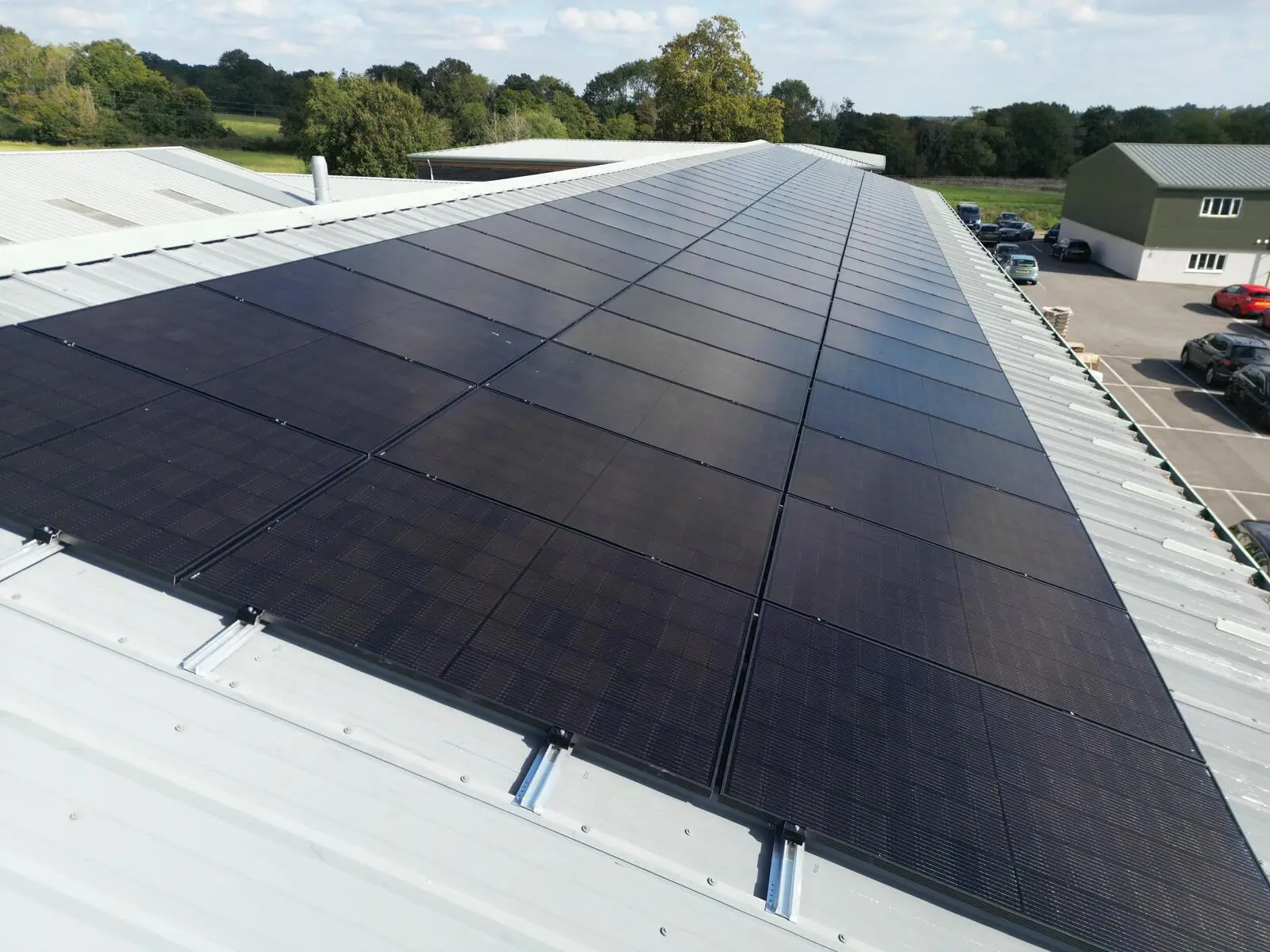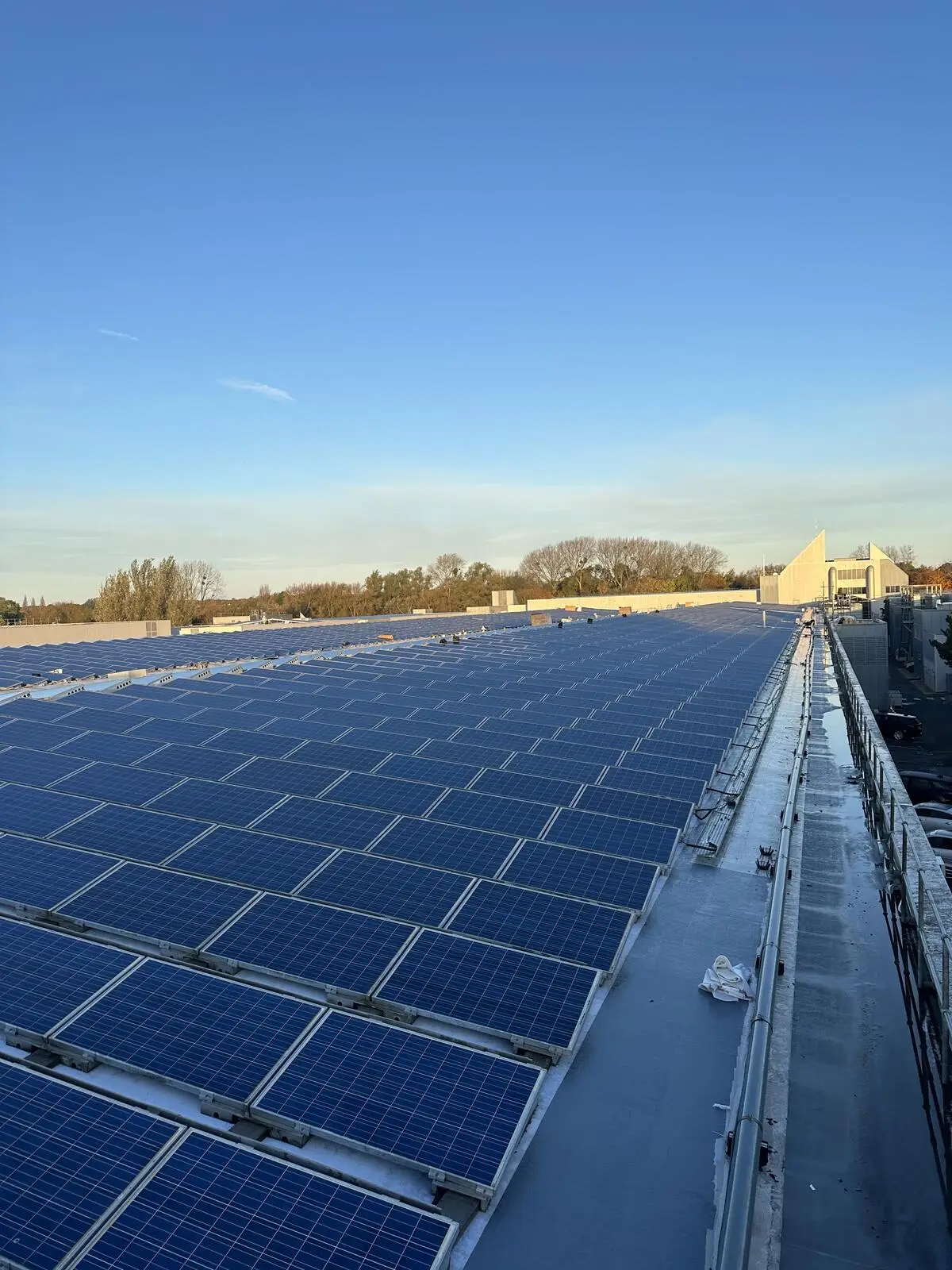
Jaguar Land Rover: 4,518 panels removed and reinstated, all 215 strings tested
A 1.1 MWp array removed and reinstated around a 30,000 m² roof replacement, with all 215 strings tested and signed off.

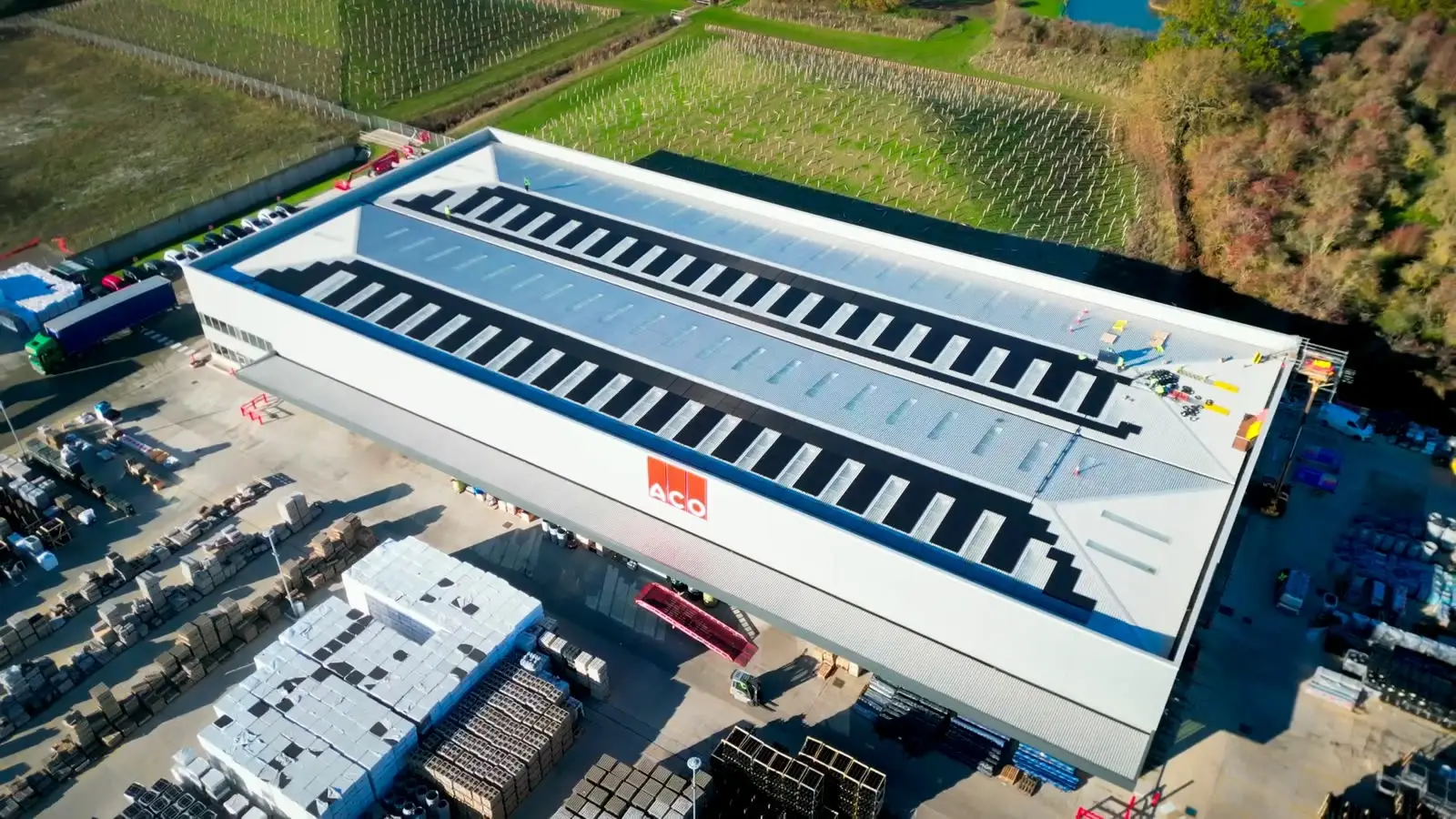
245 kWp rooftop system. 183.6 MWh generated and 94.7% used on site from December 2025, when monitoring began, to 4th August 2026.
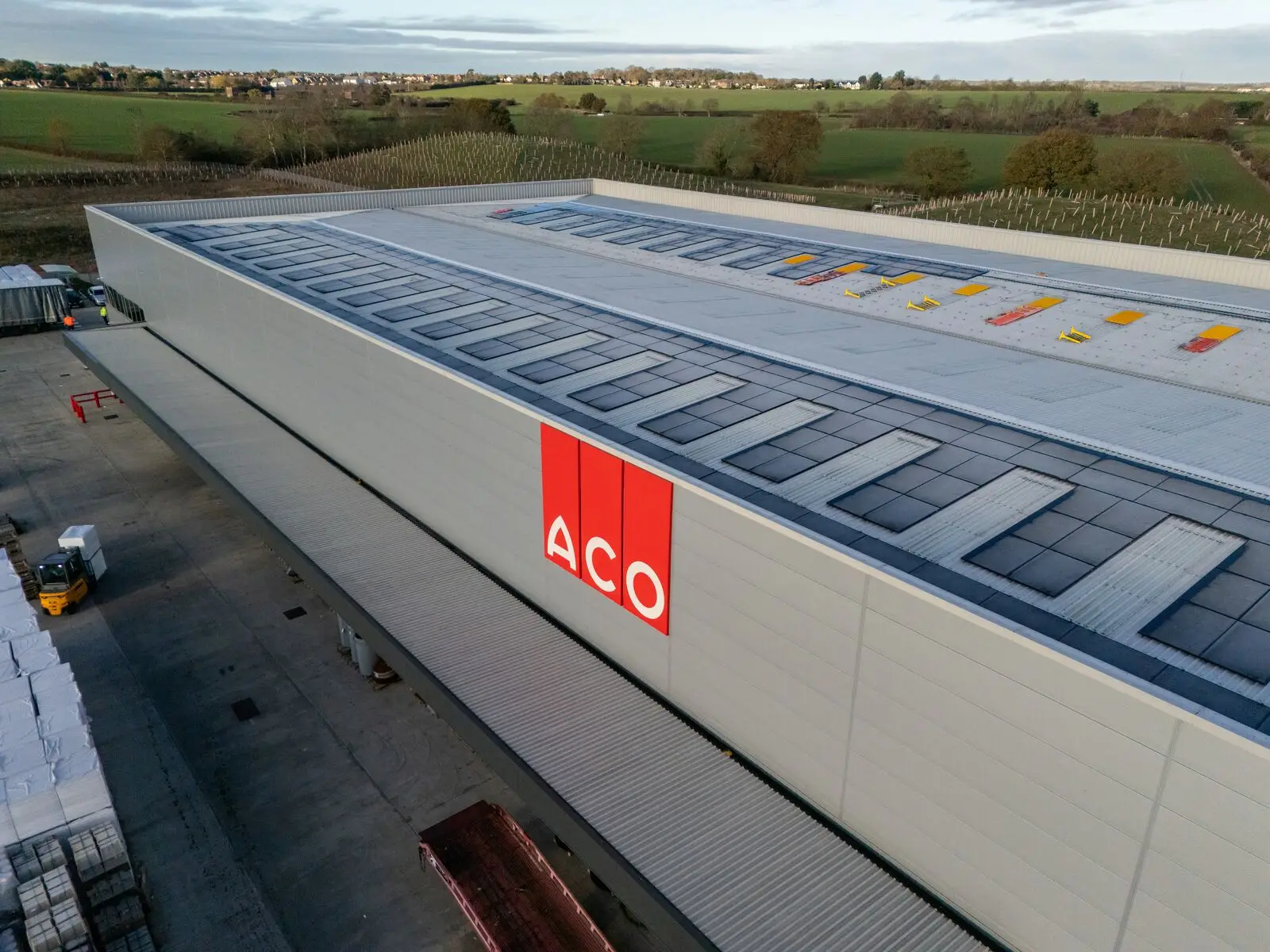
ACO Technologies makes surface water management and drainage systems at its factory in Shefford. It wanted the factory to generate a large share of its own baseload electricity, saving behind the meter and buying less from the grid.
Grid connection capacity. The existing cabling to the building could only carry about 218 kW of solar safely. That decided the size of this first phase and meant a new sub main cable had to be installed.
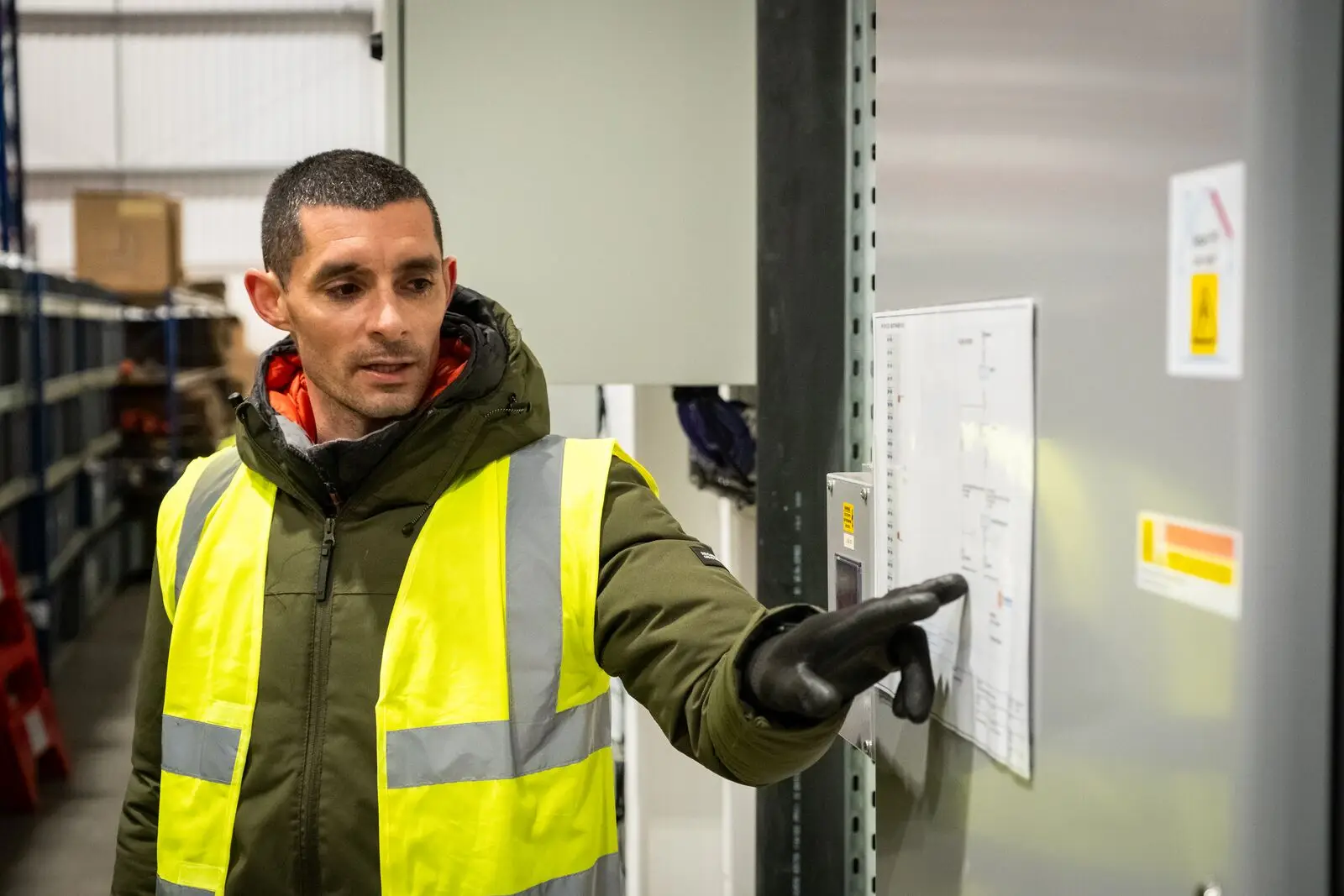
Keeping the site running. Final connections needed a power isolation, but the main incomer couldn't be switched off as it would have taken out the whole site. Only the affected panel was isolated, and the servers were kept live from the academy building.
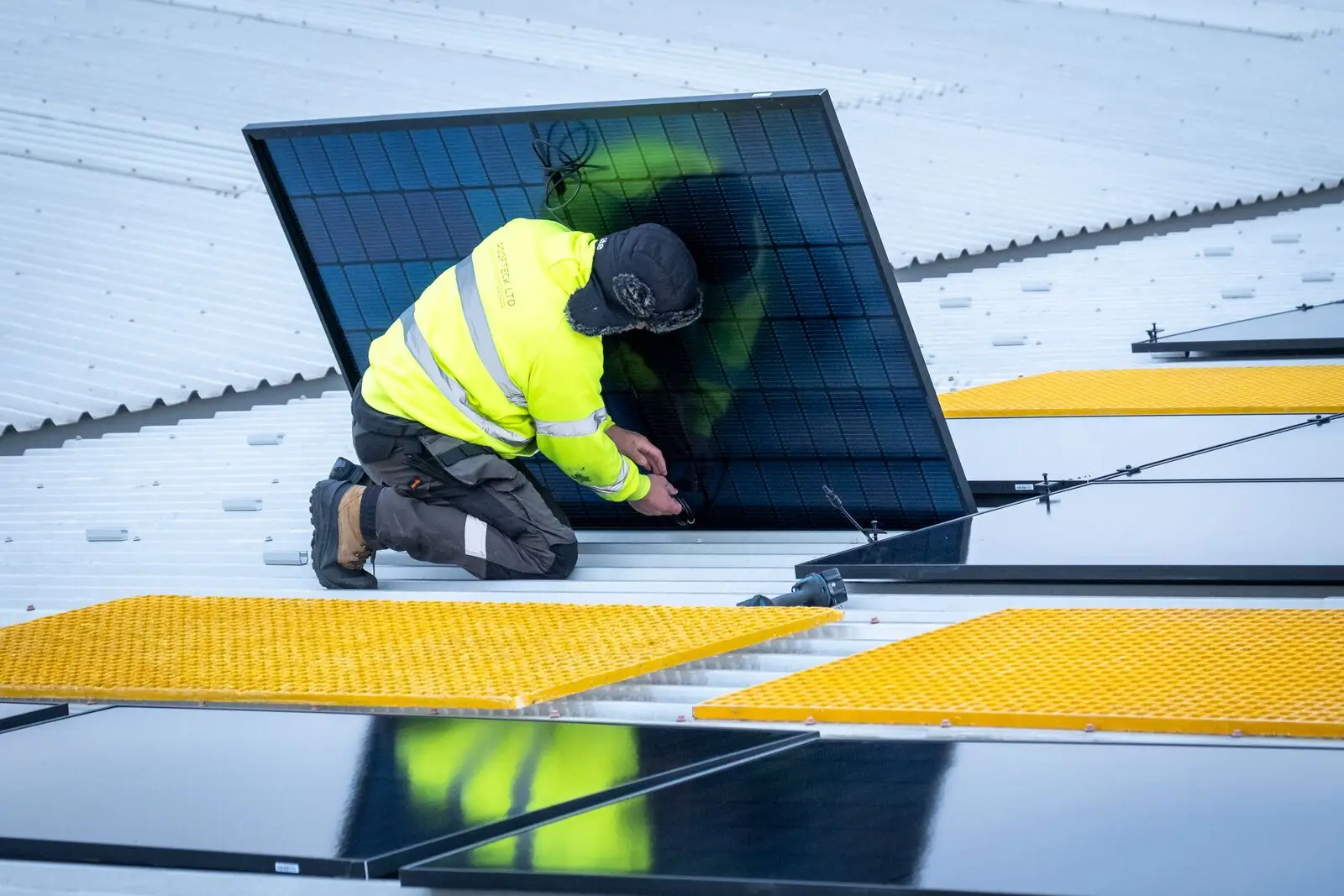
Roof access. The only existing access was a hatch and ladder. We put up scaffolding with a loading bay for the panels and a second route off the roof for emergencies.
Skylights. The roof has skylights, so covers and barriers went in for the whole job.
We surveyed the structure of the roof to find the load it could carry, and specified a mounting system to suit it.
We designed the array layout in PV*SOL to get the most generation the roof could take within its structural limits, with maintenance access kept clear.
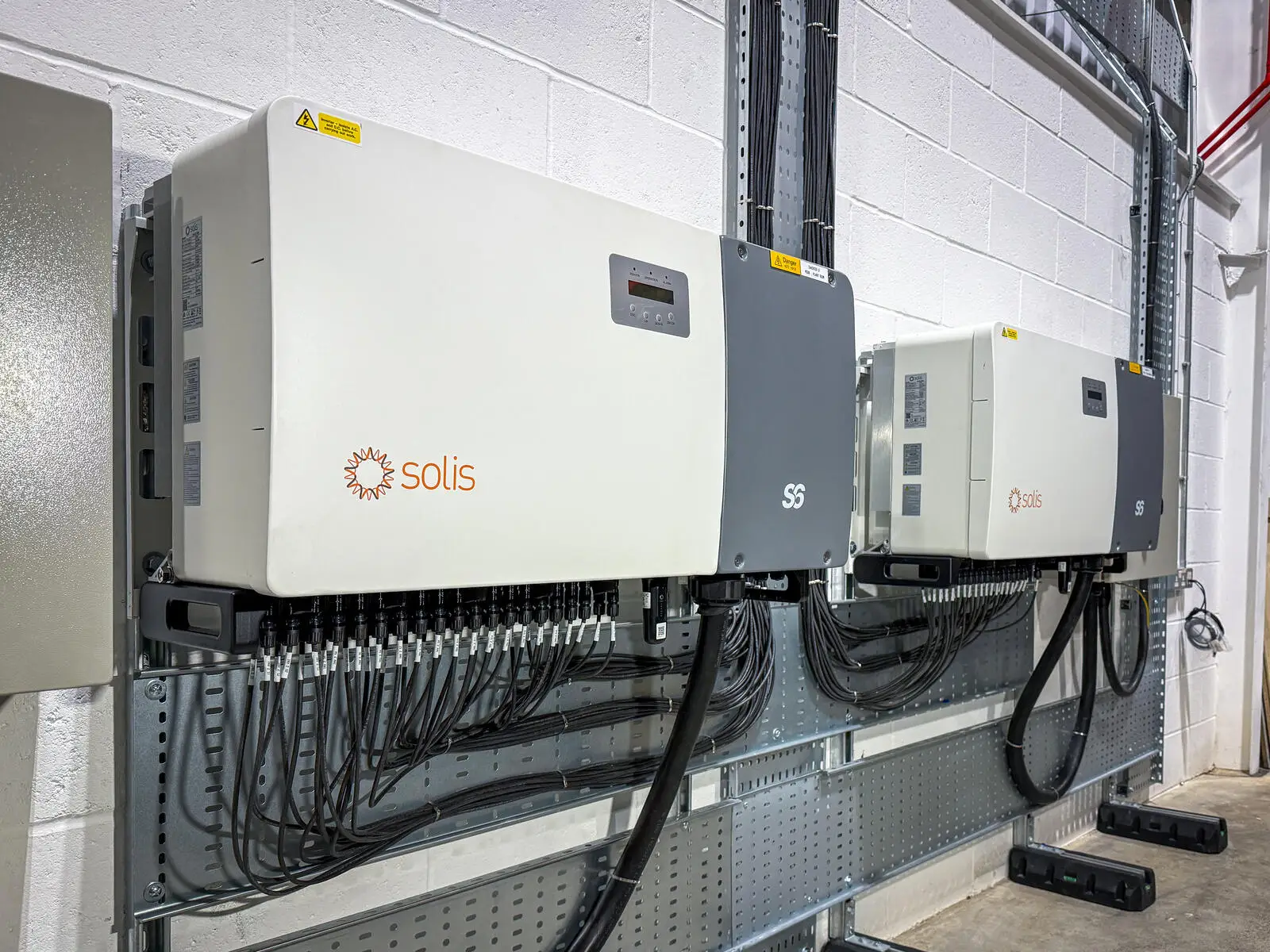
We made the G99 application to the network operator and engineered the grid connection, specified the three-phase inverters and designed the AC distribution.
We commissioned the system, verified its performance and set up its monitoring.
The job was planned around production with ACO's facilities and maintenance teams, using shared project software so dates could move if they needed to.
The cable pull, at the end of October 2025, took two days with four or five people. The final connections, which needed power off, were planned for a weekend so the production lines weren't affected.
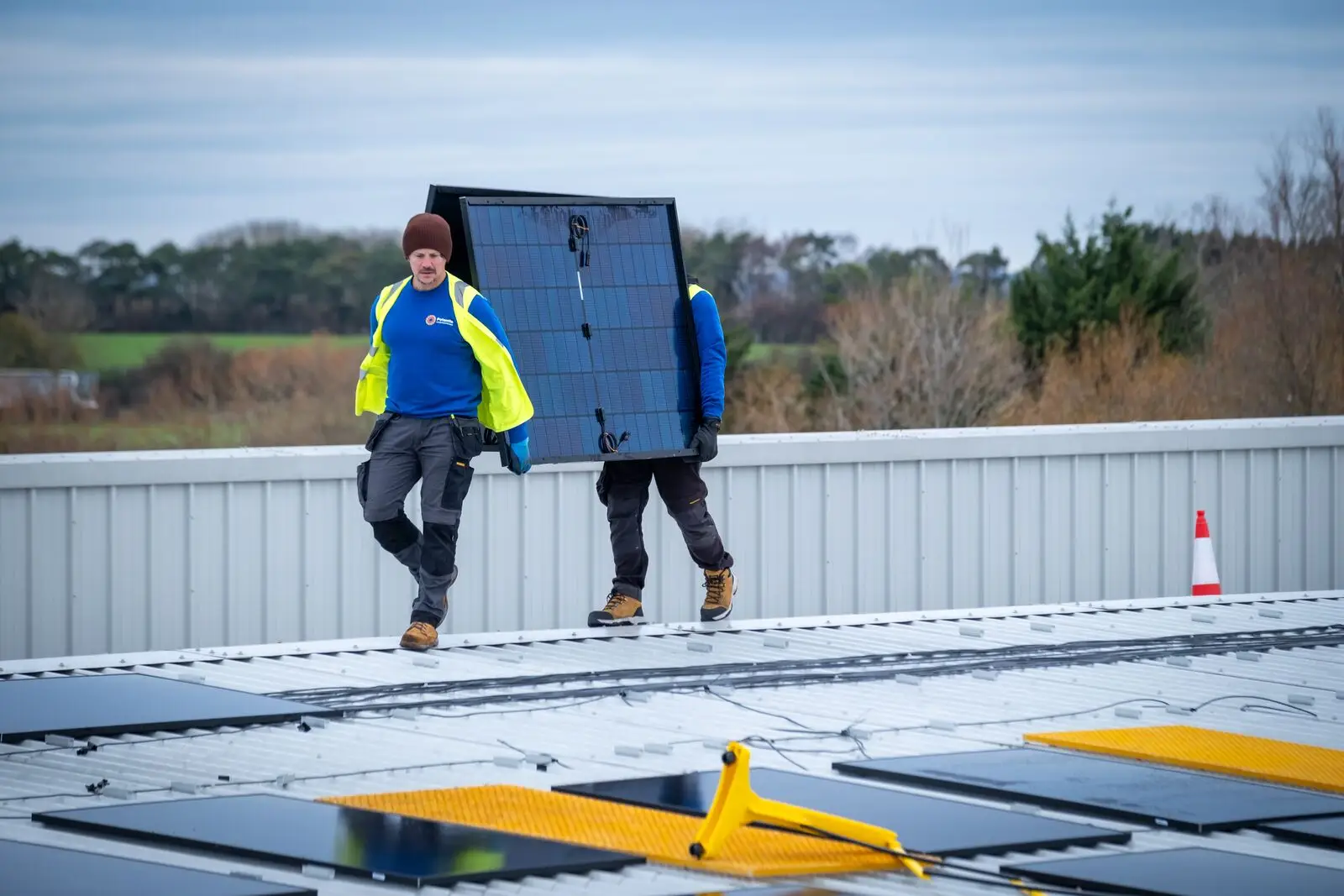
The roof work took about two weeks with five or six installers, and no more than six or seven of our people were on site at any time. Work stayed within 08:00 to 18:00.
ACO's forklift unloaded the panels into a dedicated storage area. A telehandler lifted them to the scaffold loading bay, keeping deliveries and lifting away from factory traffic. Everyone was inducted, followed ACO's site rules (including hearing protection in the noisy areas) and signed in and out digitally.
Site security. The scaffold base was locked and cordoned off so nobody could get onto the roof unsupervised.
Structure and regulations. The job ran under CDM regulations. Structural engineer calculations confirmed the roof was suitable before we started.
183.6 MWh
of electricity generated by the array
94.7 %
of the electricity generated was used on site
£46,937
of grid electricity the factory did not have to buy, at ACO's import price of 27.0p per kWh
30.8 t CO2e
of scope 2 emissions avoided: 173.84 MWh used on site at DESNZ's 2026 UK grid factor, 0.177 kgCO2e per kWh, without transmission losses

“As a UN Global Compact member ourselves, and an ambassador for UN Sustainable Development Goal Six: Clean Water and Sanitation, we felt strongly that our suppliers also had to believe in these values and frameworks, and it was one of the key reasons we chose Potentia Engineering. Our ESG commitments guide every decision we make, from decarbonising our manufacturing processes to switching to electric vehicles and upgrading our buildings to reduce heat loss. Solar is just one part of a wider effort to embed sustainability across the business.”
Delivered by the Potentia Engineering team
A 1.1 MWp array removed and reinstated around a 30,000 m² roof replacement, with all 215 strings tested and signed off.
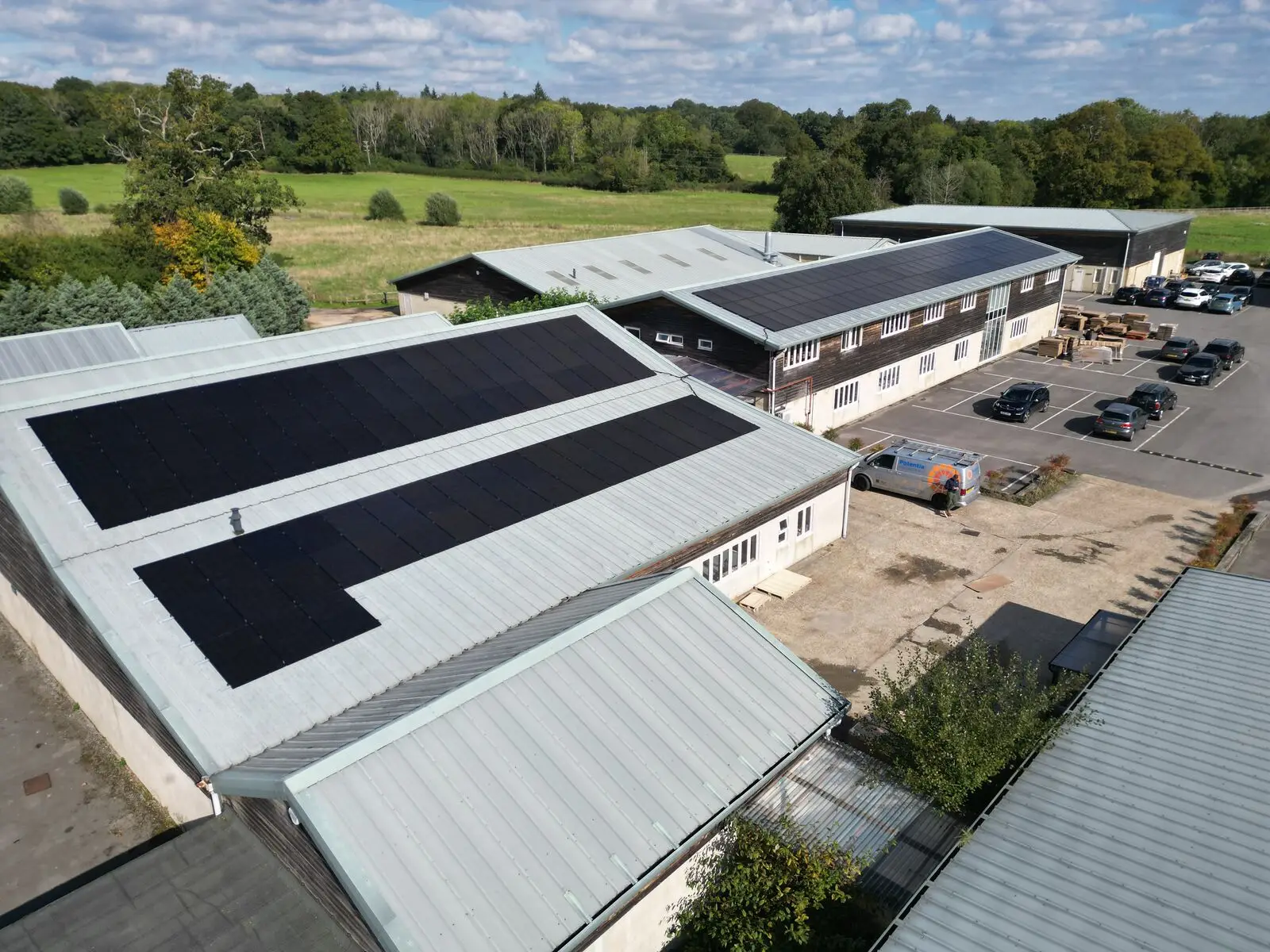
76.26 kWp across two buildings, 186 panels, with a 15.36 kWh battery, installed in under three weeks.
Send an address, a drawing or a half-hourly data file. We respond within one working day.